Navigation
  • About
  • How it Works
  • Shop
    • Business ($200+)
    • Exclusive ($750+)
    • Custom ($750+)
    • Wholesale Blocks
      • Pairs ($500+)
      • 3 Consecutive ($600+)
      • 4 Consecutive ($800+)
      • 5 Consecutive ($1,000+)
      • Blocks (212) 10+
      • Blocks – (202)
      • Blocks – (310)
      • Blocks – (415)
      • Blocks – (646)
    • Standard ($150)
    • Other Area Codes
      • 201
      • 305
      • 310
      • 312
      • 415
      • 646
      • 718
      • 732
      • 801
      • 917
  • Testimonials
  • Press
  • Blog
  • Contact Us
Account
  • Sign In
Site logo
  • About
  • How it Works
  • Shop
    • Business ($200+)
    • Exclusive ($750+)
    • Custom ($750+)
    • Wholesale Blocks
      • Pairs ($500+)
      • 3 Consecutive ($600+)
      • 4 Consecutive ($800+)
      • 5 Consecutive ($1,000+)
      • Blocks (212) 10+
      • Blocks – (202)
      • Blocks – (310)
      • Blocks – (415)
      • Blocks – (646)
    • Standard ($150)
    • Other Area Codes
      • 201
      • 305
      • 310
      • 312
      • 415
      • 646
      • 718
      • 732
      • 801
      • 917
  • Testimonials
  • Press
  • Blog
  • Contact Us

Set your main menu in Appearance > Menus

0
Cart: $0.00

No products in the cart.

Call Us – (212) 580-2000
  • Sign In
    Login Form

Site logo
0
Cart: $0.00

No products in the cart.

Call Us – (212) 580-2000

  • About
  • How it Works
  • Shop
    • Business ($200+)
    • Exclusive ($750+)
    • Custom ($750+)
    • Wholesale Blocks
      • Pairs ($500+)
      • 3 Consecutive ($600+)
      • 4 Consecutive ($800+)
      • 5 Consecutive ($1,000+)
      • Blocks (212) 10+
      • Blocks – (202)
      • Blocks – (310)
      • Blocks – (415)
      • Blocks – (646)
    • Standard ($150)
    • Other Area Codes
      • 201
      • 305
      • 310
      • 312
      • 415
      • 646
      • 718
      • 732
      • 801
      • 917
  • Testimonials
  • Press
  • Blog
  • Contact Us
Illustration showing porting a landline number to a cell phone, with transfer arrow between desk phone and smartphone
View large More details
Blog

Can You Port a Landline Number to a Cell Phone?

Posted by David

Yes — you can port a landline number to a cell phone, and the process is more routine in 2026 than it has ever been. The FCC requires every US carrier to accept incoming ports, including from traditional copper landlines, so the question is no longer whether it’s possible but how to do it without losing the number along the way. This guide walks through how landline-to-cell porting actually works, what you’ll need to gather, how long each step takes, and the handful of small mistakes that cause most failures.

Yes — Landline Numbers Can Be Ported to Cell Phones

The short answer is yes. Under federal local number portability rules, your phone number belongs to you, not your carrier. You can move it from a landline provider to any wireless carrier that serves the rate center the number is anchored to — and in practice, every major US wireless carrier covers every populated rate center, so coverage is rarely an issue. A 212 number anchored to Manhattan ports to T-Mobile, Verizon, or AT&T without complications, as does a number from any other major metro.

People port landlines for the obvious reasons. The number has been on business cards, family contact lists, and customer records for years or decades. Cutting it loose means losing every reference to it that exists in someone else’s address book. Porting preserves all of that while letting you drop the monthly landline bill and the physical handset tethered to a wall jack.

The mechanics are slightly different from the wireless-to-wireless ports most people are familiar with — landlines have a few extra verification steps, and the timeline is longer — but the underlying right is the same. Your old landline carrier cannot refuse to release the number, and your new wireless carrier handles all the paperwork on your behalf.

How Landline-to-Wireless Porting Differs

Wireless-to-wireless ports usually finish in a few hours because both carriers speak the same modern provisioning protocol and the customer data they each hold is similar. Landline-to-wireless ports take longer for two practical reasons.

First, the source-side records on a landline account are often older and less standardized than wireless records. Many copper landlines were activated decades ago, sometimes under a previous owner’s name, and the billing information on file may not match exactly what the customer believes it to be. The wireless carrier requesting the port has to verify those details against the landline carrier’s records before the transfer clears.

Second, landline-to-wireless involves a rate center confirmation. Every landline number is anchored to a specific geographic exchange — for 212 numbers, that’s Manhattan — and the receiving wireless carrier has to confirm that it serves that rate center before accepting the port. For major metros this is a formality, but the check still has to happen, and that adds a day or two to the cycle.

The current FCC porting rule requires simple ports to complete within one business day, but landline-to-wireless ports are formally classified as “complex” and have a longer allowable window. In practice, expect three to five business days from the day you submit the request to the day the port flips. If it takes longer than five business days without a clear reason from your carrier, that’s a signal to follow up.

What to Gather Before You Start

Every port requires the same set of information, and a mismatch in any one field is the single most common reason ports get delayed. For landline ports, the details matter even more because the source records may be older and less forgiving. Have all of this in hand before you contact your new wireless carrier.

The phone number being ported. All ten digits, including the area code.

The landline account number. This appears on your monthly bill from the landline provider. For some legacy phone companies, the account number includes letters or extra digits beyond the phone number itself — copy the whole string exactly as it appears.

The billing name and address exactly as the landline carrier has them on file. This is the field that trips most landline ports. If the account was opened years ago, the name might be a full legal name where you now go by a shortened version. If you moved within the same service area, the address might be your old address rather than your current one. Pull a recent bill and copy what’s printed there verbatim — middle initials, suffixes, apartment numbers, everything.

A recent landline bill, usually within the last 30 days. Some carriers ask for an uploaded copy as part of the port verification, especially for business landlines. Even if it isn’t required upfront, having one ready prevents delays if the carrier asks for it mid-process.

A Letter of Authorization (LOA), if your new wireless carrier requires one. This is a short form authorizing the release of the number. Most major wireless carriers handle the LOA electronically as part of the port request — you sign it during signup or in the carrier’s app — but some MVNOs and business plans require a separately signed document.

The destination device or line. Your new wireless carrier needs to know which phone or SIM will receive the number. For modern phones this is usually an eSIM provisioned during the port; for older devices, a physical SIM mailed to you.

How to Port Your Landline Number — Step by Step

The actual process is initiated through your new wireless carrier, not your existing landline provider. This is the most important rule of porting and the easiest one to get wrong.

Step 1 — Choose your wireless carrier and plan. Pick the carrier you want the number to live on before you start anything else. Confirm with that carrier that they accept landline-to-wireless ports for your number — every major carrier does, but it’s worth a thirty-second confirmation call to avoid surprises. If you’re moving to a prepaid or MVNO plan, double-check there too.

Step 2 — Gather the information listed above. Pull your landline bill, confirm the exact billing name and address, write down the account number, and have a digital copy of the bill ready in case the carrier asks for it. Don’t skip this step; the temptation to start the port and figure out the details mid-stream is what causes most rejections.

Step 3 — Contact your new wireless carrier to start the port. You can do this online during signup, in a retail store, or over the phone with the carrier’s port-in team. Tell them you want to port a landline number to a new wireless line and provide everything from Step 2. They’ll typically read the information back to you to confirm — listen carefully. A single transposed digit in the landline account number is the most common cause of port rejections.

Step 4 — Keep your landline service active. Do not cancel your landline service before the port completes. If you cancel early, the number is released back to the landline carrier’s general inventory and the port request will fail. You will likely lose the number permanently if this happens. Pay the next landline bill on time even if it overlaps with your new wireless service — you’ll only be paying for a few days of overlap, and it protects the number.

Step 5 — Wait through the port window. Expect three to five business days. Your new wireless carrier will usually provide a temporary phone number you can use in the meantime, so your wireless service is active from the moment you sign up. During the wait, your landline keeps working normally. The port completes silently — there’s no warning before it flips.

Step 6 — Confirm activation and clean up. Once the port completes, call your number from a different phone. If it rings your new wireless device, the port is done. At that point your landline service automatically deactivates for that number; you’ll get a final bill from the landline provider for any prorated charges. Set up voicemail on the wireless side (your old landline voicemails do not transfer), and update any place where the number was tied to landline-only features like fax-to-email forwarding.

What Can Go Wrong

Most port failures fall into a small handful of categories, and all of them are avoidable if you know what to look for.

The most common failure is a billing name or address mismatch. The landline carrier knows you as “Robert J. Smith” at the address printed on the bill; you tell the new wireless carrier “Bob Smith” at your current address. The two records don’t match, and the port rejects. Always copy from the most recent bill, including middle initials, suffixes, and unit numbers.

The second is canceling the landline too early. Customers often assume they should cancel the landline first to “free up” the number — the opposite is true. The port works by transferring an active number; an inactive number cannot be ported. Pay the overlap and let the landline cancel itself when the port flips.

Third is an account that’s been migrated to a different underlying service without the customer realizing it. Many legacy landline numbers were quietly moved from copper to VoIP years ago — your cable company may now be providing what looks like a landline but is actually a VoIP line. This usually doesn’t change the port mechanics, but the account number format may be different from a traditional copper account, and the source provider may charge a small port-out fee that pure copper providers can’t. Check with your provider if the bill doesn’t list “copper” or “POTS” service explicitly.

Fourth: fax lines and business landlines sometimes have additional features bundled to the number — hunt groups, distinctive ring, dedicated fax routing — that don’t translate to a wireless carrier. The port itself still works, but those features will be lost. If your landline number is the front-of-house line for a small business with bundled services, plan around the feature loss before you start the port, not after.

Finally, old account holds. Outstanding balances do not block the port — your landline carrier still has to release the number, and they can bill you for what you owe separately — but explicit account locks, fraud holds, or business-account port restrictions can. If you suspect there’s a hold on the line, call your landline carrier and explicitly ask them to remove any port restrictions before you start.

Special Cases

A few situations deserve their own notes because they come up more often with landline ports than with wireless ports.

Porting a fax line: Fax numbers can be ported to wireless carriers, but a wireless line cannot send or receive fax in the traditional sense. If the number is genuinely used for fax, port it to a virtual fax service that converts incoming faxes to email instead — or check our guide to using a 212 number on a fax line for setup options.

Porting a business landline with multiple extensions: Wireless lines hold one number per SIM. If your landline has a main number plus multiple extensions or rollover lines, you can port the main number to a wireless device, but the extensions either need to be ported to a multi-line VoIP business service or retired. RingCentral, Vonage, and similar VoIP business platforms handle multi-line landline ports natively and may be a better destination than a single wireless line for a business setup.

Porting a number you’ve had for decades: Very old landline numbers occasionally have data inconsistencies in the carrier’s records — the name on file might be a long-deceased relative, or the address might be a previous home. The port still works, but expect the carrier to request additional verification documents (a recent bill plus a photo ID, for example). Build a few extra days into the timeline.

Porting a landline that’s already VoIP under the hood: If your “landline” comes from your cable or fiber provider, it’s almost certainly VoIP regardless of what the bill says. Port-out timelines and procedures from these providers usually look more like VoIP-to-wireless (one to three business days) than traditional copper ports.

Porting to keep a 212 number on a cell phone: If your goal is specifically to keep a Manhattan 212 number after retiring a New York landline, this is one of the most common reasons people port at all. The path is identical to any other landline-to-wireless port, and the result is a Manhattan area code on your modern phone — see our overview of getting a 212 area code on a cell phone for context on why this matters in 2026.

Frequently Asked Questions

Can any landline number be ported to a cell phone?
In nearly every case, yes. The receiving wireless carrier needs to serve the rate center the landline is anchored to, but every major US wireless carrier covers every populated rate center. Refusal to accept a port is extremely rare and usually points to a paperwork issue rather than a true incompatibility.

How long does a landline-to-cell port take?
Three to five business days is the typical window. Wireless-to-wireless ports complete in a few hours, but landline ports involve extra verification and rate center confirmation steps that lengthen the cycle. Most wireless carriers give you a temporary number to use while you wait.

Should I cancel my landline before starting the port?
No. Keep the landline active until the port completes. Canceling early releases the number back to the landline carrier and almost always causes the port to fail. The landline will deactivate on its own once the port flips.

Does porting a landline cost money?
The FCC prohibits the old carrier from charging a fee to release your number. Your new wireless carrier may charge a small activation or SIM fee for the new line, and the landline carrier may bill you for early termination or pro-rated final charges, but the port itself is free. Ask your new carrier whether they’ll waive any activation fee — many will, especially for a new line.

What if my landline carrier says I can’t port the number?
They cannot legally refuse to release a number once you’ve requested the port through your new wireless carrier. If a customer service representative tells you otherwise, you’re getting incorrect information. Escalate to the carrier’s port-out department, and if the issue persists you can file a complaint with the FCC, which tracks porting compliance.

Can I port a landline to a prepaid wireless plan?
Yes. Prepaid carriers — Cricket, Metro by T-Mobile, Mint, US Mobile, Google Fi, Boost — all accept landline-to-prepaid ports. The timeline is the same three to five business days, and the same rules about keeping the landline active during the port apply.

Will I lose any features when I move from a landline to a cell phone?
Some landline-specific features don’t carry over: hunt groups, distinctive ring, dedicated fax routing, and traditional 911 location handling all work differently on wireless. For most home users this isn’t noticeable. For businesses with multi-line setups, a VoIP destination may be a better fit than a single wireless line.

What happens to my voicemail and call history?
Landline voicemails do not transfer to the new wireless line. If you want to keep any messages, save them before the port — many landline carriers let you forward voicemails to email. Call history stays with the landline carrier and isn’t migrated.

Can I port a landline number back if I change my mind?
Once the port to your wireless carrier completes, the number is yours to port again at any time. There’s no FCC-mandated waiting period, though some carriers impose short internal hold periods to prevent fraud. You could port it back to a landline service, to a VoIP service, or to a different wireless carrier whenever you want.

Is porting better than just call-forwarding the landline?
Usually yes, because porting eliminates the monthly landline bill and consolidates everything onto one device. Call-forwarding requires keeping the landline service active forever, which means paying for two phone lines instead of one. For a deeper comparison see our porting vs call-forwarding overview.

Ready to Move Your Landline to a Cell Phone?

If you’re retiring a New York landline and want to keep a Manhattan area code on your new wireless line — or you’re starting from scratch and want a 212 number on your cell phone — our shop has 212 numbers ready to port to any major wireless carrier. Numbers start From $150 depending on the digit pattern.

Browse current inventory to see what’s available, or call us at (212) 580-2000 if you’d like help choosing a number or have questions about porting a specific landline.

Related Reading

  • Porting a 212 Number to a Cell Phone
  • Get a 212 Area Code Phone Number on a Cell Phone
  • How to Transfer Your Phone Number To a New Carrier
  • 212 Area Code Cell Phone Number vs Call-Forwarding
  • 212 Phone Number — Porting vs. Call-Forwarding
  • Using an eSIM with a 212 Area Code Phone Number
February 28, 2025 /
Stylized NYC skyline illustration celebrating the new 465 area code joining Manhattan and the five boroughs
View large More details
Blog

Brand New New York City 465 Area Code

Posted by David

New York City is getting a sixth area code. The 465 overlay is the newest addition to the city’s numbering plan and will start serving the Bronx, Brooklyn, Queens, Staten Island, and Marble Hill alongside the existing 718, 347, and 929 codes. Here’s what 465 actually means for residents and businesses, why overlays happen, and why Manhattan’s 212 stays exactly as prestigious as it has always been.

What Area Code 465 Is

Area code 465 is an overlay assigned to the same geographic region currently served by 718, 347, and 929 — that is, the four outer boroughs of New York City (the Bronx, Brooklyn, Queens, and Staten Island) plus the Marble Hill section of Manhattan, which sits north of the Harlem River and has always shared the outer-borough numbering plan rather than Manhattan’s. It does not overlap Manhattan proper. Manhattan continues to use 212, 646, and 332.

An overlay means 465 sits on top of the existing codes rather than replacing them or carving out a smaller geographic slice. Anyone with a 718, 347, or 929 number keeps it. New phone numbers issued in the overlay region — for residential lines, businesses, or wireless customers — may be assigned a 465 prefix once existing inventory in the older codes runs low. Number assignment is handled by the carriers themselves, drawing from blocks allocated by the North American Numbering Plan Administrator.

The 465 code is expected to provide new numbers for roughly 11 years before the region needs another relief code, though that timeline depends entirely on how fast the inventory is consumed. Aggressive mobile growth or a surge in business line provisioning could shorten it; conservation measures like number pooling could extend it.

Why New York City Needs Another Area Code

The straightforward answer is that the city is running out of available numbers in its existing codes. New York City already has five active area codes — 212, 347, 646, 718, 917, 929, and 332 across the five boroughs — and the four-borough overlay region has the largest concentrated population. Every active phone line, business DID, wireless number, and VoIP line in that region pulls from the same pool of available NPA-NXX combinations, and that pool is finite by design.

Several long-running trends drive the exhaust faster than population growth alone would suggest. The first is mobile line proliferation. Most adults carry at least one wireless number, and many carry a second line for work or a separate eSIM for travel. Each of those lines is a distinct number drawn from a real assignment block, regardless of whether two lines live on the same physical device.

The second is business growth. Remote work, virtual offices, and direct-inward-dial (DID) systems mean a single company can consume dozens or hundreds of phone numbers — one per employee desk extension, one per support queue, one per marketing campaign. Each new business in Brooklyn or Queens that adopts a modern phone system creates fresh demand on the local number supply.

The third is the inherent inefficiency of NPA-NXX block allocation. Even with thousand-number pooling (a conservation measure used in New York since the early 2000s), carriers still hold unused numbers that are not available to other carriers. That structural waste means the practical exhaust point arrives well before the theoretical 7.92 million numbers per area code are actually in use.

How an Overlay Changes Dialing

Overlays require ten-digit dialing within the overlay region. This rule has been in place across all of New York City for many years, so the introduction of 465 does not change daily dialing habits — you already dial the area code for every local call. If anything, 465 reinforces a habit that is already universal here.

For people moving into the overlay region or starting a new business there, the practical impact is that a newly issued number may carry the 465 prefix instead of 718, 347, or 929. This is a routing assignment, not a service difference. A 465 number works exactly like a 718 or 929 number — same call quality, same carrier features, same pricing, same coverage. The digits are the only thing that changes.

Calls between 465 and any other NYC area code are local. Texts, voicemail, caller ID, emergency services, and number portability all function identically. There is no second-class status to a newer overlay code; it is simply the next block of inventory the carriers will draw from.

What 465 Means for the 212 Area Code

Nothing, directly — and that is the point. The 465 overlay applies to the four outer boroughs and Marble Hill, not to Manhattan. Manhattan numbers continue to come from the 212, 646, and 332 pools. The introduction of 465 has no effect on the supply, scarcity, or prestige of 212.

If anything, the addition of yet another overlay code in NYC reinforces why 212 remains the most recognized phone prefix in the country. Manhattan has had 212 since 1947 — the year the original North American Numbering Plan went live — and the digits have become synonymous with the borough’s cultural and commercial identity. Every new overlay code in the region (929 in 2011, 332 in 2017, and now 465) underlines how rare original-issue Manhattan 212 numbers actually are. The city keeps growing; 212 doesn’t get any bigger.

For a business or individual who wants a phone number tied to Manhattan rather than the broader NYC numbering region, 212 remains the only prefix that does that work. A 465 number is a New York number, but it carries the geographic association of the outer boroughs. A 212 number specifically signals Manhattan.

How to Get or Keep a 212 Number as 465 Rolls Out

The arrival of 465 is also a good occasion to revisit how you secure a 212 number if you want one, since the supply mechanics for 212 are different from getting a brand-new 465 number from your carrier.

Step 1 — Understand the supply difference. A new 465 number is assigned by your wireless carrier or VoIP provider from inventory they have been allocated. A new 212 number is essentially unavailable through this same mechanism, because no fresh 212 inventory has been released to carriers in many years. The supply of new 212 numbers comes almost entirely from the secondary market — numbers that were previously assigned to a Manhattan business or resident and released back into a pool.

Step 2 — Pick a 212 number from existing inventory. You can browse current inventory on our shop. Each number is already provisioned on a portable line and ready to transfer to the carrier of your choice. Pricing starts From $150 depending on digit pattern and memorability.

Step 3 — Choose your destination carrier. Decide where you want the 212 number to live. Modern wireless carriers — T-Mobile, Verizon, AT&T — and most VoIP services (Vonage, RingCentral, Google Voice) accept inbound ports of 212 numbers without geographic restriction. eSIM activation works the same way as a physical SIM port.

Step 4 — Submit the port request through your new carrier. All porting in the US is initiated through the carrier you’re moving the number to, not the one you’re moving from. We provide the source account details at purchase, so you simply hand them to your new carrier and they handle the FCC-mandated handoff. Wireless-to-wireless ports typically complete in a few hours.

Step 5 — Confirm activation and set up the line. Once the port flips, calls to your 212 number ring on your new device. Set up voicemail on the new carrier, send a test text, and confirm that incoming calls work. The whole process from purchase to active line is usually finished within a single business day.

Frequently Asked Questions

When did the 465 area code go into service?
The 465 overlay was approved by the New York State Public Service Commission as a relief code for the four-outer-borough region and is rolling into active assignment as carriers exhaust their 718, 347, and 929 inventory. New numbers carrying the 465 prefix are being issued to new lines in that region.

Where will 465 numbers be used?
The 465 overlay covers the Bronx, Brooklyn, Queens, Staten Island, and the Marble Hill section of Manhattan — the same geographic region currently served by 718, 347, and 929. It does not cover the rest of Manhattan, which continues to use 212, 646, and 332.

Will I have to change my existing 718, 347, or 929 number?
No. Overlays add a new code on top of existing ones without affecting current numbers. Anyone who already has a 718, 347, or 929 number keeps it indefinitely. The 465 code only applies to newly issued numbers.

Does the 465 overlay affect 212 area code numbers?
No. The 465 overlay is restricted to the outer boroughs and Marble Hill. Manhattan’s 212, 646, and 332 area codes are unaffected. The Manhattan numbering plan continues to operate independently of the outer-borough plan.

Are 212 numbers becoming more valuable because of 465?
The arrival of yet another NYC overlay underscores how rare original-issue 212 numbers are, but the practical value of a 212 number has been driven by Manhattan-specific demand for many years. The introduction of 465 doesn’t change the supply of 212 numbers — it just highlights the contrast between a finite Manhattan code and an ever-expanding outer-borough overlay set.

Can I request a specific area code from my carrier?
Carriers generally assign whatever code their current inventory allows, so in the outer-borough region a new line may be issued as 465, 929, 347, or 718 depending on what the carrier has available that day. To guarantee a specific area code — particularly 212 — you typically need to source the number from the secondary market and port it in.

Do 465 numbers work the same as 718 numbers?
Yes. Once an overlay code is active, numbers in that code function identically to numbers in any other code in the same region. Same call routing, same local calling area, same emergency services, same portability rights.

Will 465 be the last new area code for New York City?
Unlikely. NYC has added a new area code roughly every five to ten years for the last few decades, and the trend is driven by structural demand — mobile lines, business DIDs, IoT phone provisioning — that is not slowing down. Another relief code in some part of the city within the next decade is reasonable to expect.

How does the 465 overlay compare to other NYC area codes?
465 follows the same overlay pattern used for 347 (introduced 1999), 646 (1999 for Manhattan), 929 (2011), and 332 (2017). It’s the latest addition rather than a fundamentally new kind of code. For broader context, see our overview of where 929 is used and how it fit into the same outer-borough plan.

Ready to Claim a Manhattan 212 Number?

If the introduction of 465 has you thinking about how distinctive a Manhattan 212 number is by comparison, you can pick from current inventory now. Every number on our shop is already on a portable cell-capable line, so the transfer to your wireless carrier is the fast wireless-to-wireless path — usually a few hours, often same-day.

Browse current inventory to see what’s available, with pricing From $150. Or call us at (212) 580-2000 if you’d like help choosing a number or have questions about porting to a specific carrier.

Related Reading

  • New York City Area Codes 212, 646, and 332
  • 929 Area Code: Where It’s Used & How to Get One
  • How Many Area Codes Are In New York City?
  • Are 212 Area Code Phone Numbers Still Available?
  • The Prestige of 212 Area Code Phone Numbers
  • Using an eSIM with a 212 Area Code Phone Number
February 20, 2025 /
Editorial illustration of a business phone number setup with smartphone, business card, and office interior
View large More details
Blog

How to Get a Business Phone Number

Posted by David

A business phone number separates your professional life from your personal one, gives customers a consistent way to reach you, and signals that your business is real. This guide walks through the options available in 2026, how to choose the right type of number for your situation, and what to do once you have one.

What a Business Phone Number Actually Gives You

A business phone number is a dedicated line — separate from your personal mobile — that handles calls, voicemail, and texts for your business. It can be a local number tied to a specific city, a toll-free number that works nationwide, or a vanity number that spells a word. What matters is that the number is exclusively yours for business, so you can publish it on your website, your invoices, and your business cards without exposing your personal mobile.

The practical benefits stack up quickly. Your personal number stays private, which matters when a customer relationship goes sideways or when you sell the business. Multiple employees can answer the same line through a VoIP app, so the business doesn’t depend on one person being awake. You can route calls based on time of day, send unanswered calls to voicemail-to-email, and track which marketing channels generate which calls. None of that works if you’re using your personal cell number.

Types of Business Phone Numbers

Three types cover almost every situation a small or mid-sized business runs into.

Local numbers use a specific area code tied to a city or region. They signal that you have a presence in that market, which is why a New York business benefits from a 212 area code more than a generic toll-free line. Local numbers are the most common choice for service businesses, professional practices, and any company whose customers are geographically concentrated. For more on why area code choice matters, see our guide on the importance of a trustworthy 212 area code phone number.

Toll-free numbers start with 800, 888, 877, 866, 855, 844, or 833. They’re free for the caller and useful for businesses that serve customers nationwide or that want a single line for support across regions. The tradeoff is that toll-free numbers feel generic — they don’t suggest where your business is located, and they’re associated with call centers and telemarketers in some customers’ minds.

Vanity numbers spell a word on the keypad — 1-800-FLOWERS being the classic example. They’re memorable and great for radio or billboard advertising, but the pool of available combinations is small and the good ones are expensive. Vanity numbers can be local (a 212 vanity is a strong combination because the area code itself is a brand) or toll-free.

You can also layer on additional numbers as your business grows. Many VoIP platforms let you add a local number in a new city without changing your main line, which is useful for expanding into a second market without opening a physical office there.

Choose a Service Provider

The provider you pick determines what you pay, what features you get, and how the number behaves day to day. The market has shifted decisively toward cloud-based VoIP services over the last decade, and that’s where most new business lines live in 2026.

VoIP business platforms like RingCentral, Vonage Business, Grasshopper, Dialpad, and OpenPhone offer monthly per-user pricing with no long-term contracts. The included features typically cover call forwarding, voicemail-to-email, auto-attendants, mobile and desktop apps, business SMS, and basic analytics. Higher tiers add video conferencing, CRM integrations, and call recording.

Google Voice offers a stripped-down business tier (Google Voice for Workspace) that’s inexpensive and integrates cleanly with Gmail and Google Calendar. It’s a fit for very small teams or solo operators who already live inside Google Workspace, less so for businesses that need full PBX features.

Mobile carriers also sell business plans that add a second line to a smartphone. T-Mobile, Verizon, and AT&T all offer this, and for a one-person business it can be the simplest option — your business number rings the same phone you already carry, just on a separate line. The tradeoff is fewer team features compared to a dedicated VoIP platform.

Traditional copper landlines still exist but are no longer a practical choice for most new businesses. They’re more expensive, less flexible, and tied to a physical address, which defeats the point of a mobile workforce.

How to Get a Business Phone Number — Step by Step

Once you know the type of number and the provider you want, the actual setup is straightforward and usually takes less than an hour.

Step 1 — Pick your number first. Most providers let you search available numbers in their dashboard during signup. If you want a specific area code with limited supply — like 212 — buy the number from a specialty provider before signing up with the VoIP service, then port it in. You can browse current inventory at our shop. Numbers start From $150.

Step 2 — Sign up with your chosen provider. Provide business details, billing info, and choose the plan tier that matches your team size and feature needs. Most providers offer a free trial or a 30-day money-back window — use it to test the apps and call quality before committing.

Step 3 — Activate or port your number. If you’re choosing a new number from the provider’s inventory, it activates within minutes. If you’re porting an existing number in, the provider will guide you through submitting a Letter of Authorization and verifying account details with the previous carrier. Wireless ports complete in a few hours; VoIP-to-VoIP ports usually take one to three business days.

Step 4 — Configure call handling. Set up your voicemail greeting, business hours, and call routing. Auto-attendants (“Press 1 for sales, 2 for support”) work well even for one-person businesses because they make the operation sound bigger. Voicemail-to-email forwards transcripts and audio to your inbox so you can triage messages from anywhere.

Step 5 — Install the apps and test. Download the provider’s mobile and desktop apps and log in. Call your new number from a different phone and confirm it rings through, that voicemail captures messages correctly, and that the auto-attendant routes calls where you expect. Send a test text if your provider supports business SMS.

Step 6 — Publish the number. Update your website, Google Business Profile, social profiles, email signature, business cards, and any marketing materials. Consistency matters — search engines and customers both notice when your phone number doesn’t match across listings.

Features Worth Setting Up

The default VoIP plan covers basics, but a handful of features punch above their weight for small businesses.

Auto-attendants make a small operation sound established. Even a single greeting that says “Press 1 to leave a message, or stay on the line for the next available representative” sets expectations and routes callers efficiently. Voicemail-to-email is the second feature most businesses underuse — having transcripts arrive in your inbox means you actually respond to messages instead of forgetting to check the voicemail box. Call forwarding to a mobile keeps you reachable when you’re out, with the option to set business hours so after-hours calls go straight to voicemail.

Call recording is required in some regulated industries and useful for training. Most VoIP platforms include it on higher tiers; check your state’s two-party consent laws before turning it on. Business SMS lets customers text the same number they call, which has become a strong customer-service expectation among under-40 buyers. CRM integrations (Salesforce, HubSpot, Zoho) automatically log calls against contact records, which is worth setting up if you sell anything that involves follow-up.

Frequently Asked Questions

Do I need a separate business phone number if I’m a one-person operation?
Yes, for two reasons. First, mixing business and personal calls on one number means your personal mobile shows up on every invoice, business card, and Google listing — and stays there permanently. Second, when the business grows or sells, a separate line transfers cleanly with the business. Bolting your personal mobile to a business identity creates problems later.

Can I use a 212 area code for a business that isn’t in New York?
Yes. A 212 number is a brand asset, not a location requirement. Many businesses use a Manhattan area code to signal presence in the New York market even when their physical office is elsewhere. VoIP services route calls based on the internet, not the geography of the number.

How much should a business phone number cost?
VoIP business plans typically run per user per month at the entry tier, with mid-tier plans adding video and integrations. Numbers themselves are usually free from the provider, but specialty numbers (vanity, premium area codes like 212) are sold separately. 212 numbers from our shop start From $150 as a one-time purchase.

Can I port my business number if I change providers later?
Yes. Number portability is a federal right — you own the number, not the carrier. If you outgrow your initial provider, you can port the number to a new VoIP platform without changing the digits your customers know. The port typically takes 1 to 3 business days for VoIP-to-VoIP transfers.

Is a toll-free number better than a local number?
It depends on your customers. If they’re nationwide and you want a single line for support, toll-free works. If they’re concentrated in one metro area or you want to signal local presence, a local number outperforms toll-free. Many businesses use both — a local number for primary use and a toll-free line for customer support.

Can I add a business number as a second line on my existing iPhone or Android?
Yes. Modern eSIM-capable phones (iPhone 14 and newer in the US, most current Android flagships) support multiple lines simultaneously. You can also use a VoIP app — RingCentral, Vonage, Google Voice, and others all run as standalone apps that handle the business line independently of your primary mobile carrier.

Ready to Claim a 212 Number for Your Business?

If you want a Manhattan area code as the cornerstone of your business identity, every 212 number in our shop is ready to port to the VoIP provider of your choice. Browse current inventory to see what’s available right now — prices start From $150. Call us at (212) 580-2000 if you’d like help picking the right number for your business or have questions about porting it to a specific provider.

Related Reading

  • How to Get a Phone Number For Business
  • The Importance of a Trustworthy 212 Area Code Phone Number
  • Most Desirable Area Codes
  • How to Transfer Your Phone Number To a New Carrier
  • Telemarketing Benefits of a 212 Area Code Phone Number
  • 212 Area Code Cell Phone Number vs Call-Forwarding
February 16, 2025 /
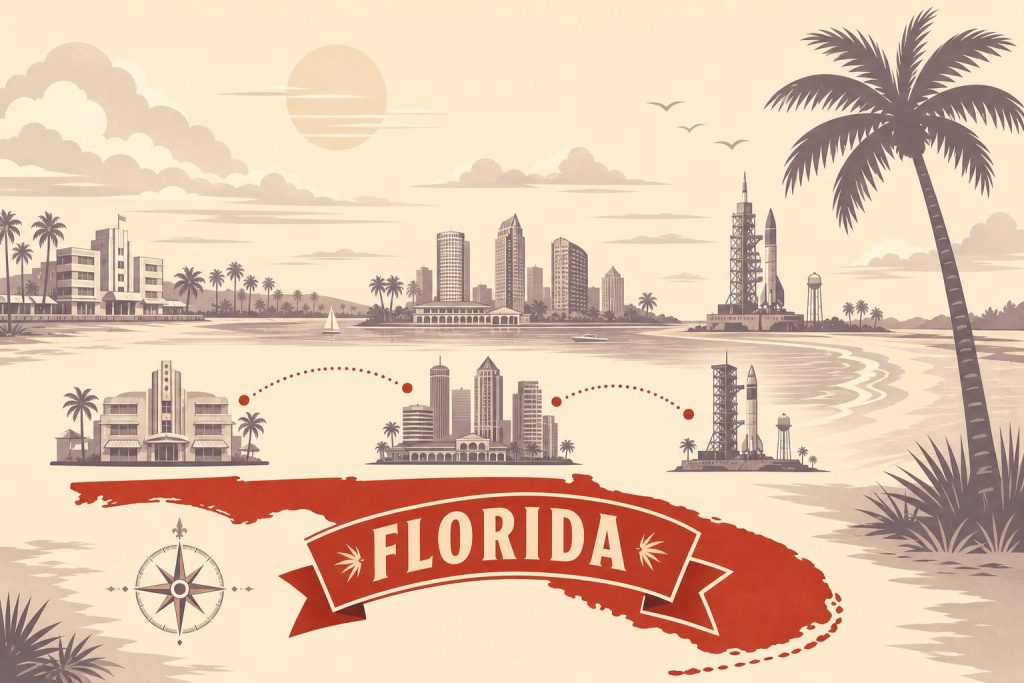
Stylized travel-poster map of Florida showing area code regions from Miami to Tampa in brick red and mauve-gray
View large More details
Blog

What Area Codes Are Used In Florida?

Posted by David

Florida uses 17 area codes across the state, from 305 in Miami to 850 in the Panhandle. This guide lists every active Florida area code, the cities and counties it covers, which codes overlay each other, and why the state keeps adding new ones.

Florida Area Codes at a Glance

Florida is the third-most-populous US state and uses 17 active area codes to serve roughly 22 million residents plus a constant flow of tourists and seasonal residents. Several of the busiest regions — Miami-Dade, Broward, Orlando, and Tampa Bay — run on overlay pairs, meaning two or more area codes share the same geography. That’s why ten-digit dialing is required across the entire state.

Florida area codes are administered by the North American Numbering Plan Administrator (NANPA), the same body that assigns area codes nationwide. New codes get added when the existing inventory in a region approaches exhaustion, which has happened repeatedly in Florida as the state has grown.

Major Metro Area Codes

These are the area codes that cover Florida’s largest population centers.

305 and 786 — Miami-Dade County and the Florida Keys. 305 is the original Miami area code, in service since 1947. 786 was added as an overlay in 1998 and now carries most new number assignments in the region. Both codes also cover Monroe County (the Keys). For more on 786 specifically, see our guide to where area code 786 is located.

954 and 754 — Broward County (Fort Lauderdale). 954 split from 305 in 1995 to serve Broward County. 754 was overlaid in 2001 as Broward grew. Together they cover Fort Lauderdale, Hollywood, Pompano Beach, and surrounding cities.

407 and 321 — Orlando and Central Florida. 407 covers Orlando, Orange County, and much of Seminole and Osceola counties. 321 was added in 1999 as an overlay and also serves the Space Coast (Brevard County, including Melbourne and Cape Canaveral).

813 — Tampa. Covers the city of Tampa and most of Hillsborough County. 813 is one of Florida’s older area codes and currently does not have an overlay, though one has been discussed as numbers tighten.

727 — St. Petersburg and Clearwater. Split from 813 in 1998 to serve Pinellas County and most of Pasco County. Covers the western Tampa Bay region.

904 — Jacksonville. Serves Jacksonville, Duval County, and most of northeastern Florida including St. Augustine and the surrounding First Coast.

561 — Palm Beach County. Covers West Palm Beach, Boca Raton, Boynton Beach, and the rest of Palm Beach County.

Regional and Less-Populated Area Codes

Smaller cities and rural Florida are served by several distinct area codes, most of which still run on single-code dialing without overlays.

239 — Southwest Florida. Covers Naples, Fort Myers, Cape Coral, and most of Lee and Collier counties. Split from 941 in 2002.

941 — Sarasota and Bradenton. Serves Sarasota County, Manatee County, and Charlotte County. Originally covered a much larger southwest region before splits in 1996 and 2002.

863 — Heartland Florida. Covers Lakeland, Winter Haven, Sebring, and most of Polk, Highlands, and Hardee counties. Split from 941 in 1999.

772 — Treasure Coast. Serves Port St. Lucie, Stuart, Vero Beach, and most of Martin, St. Lucie, Indian River, and Okeechobee counties. Split from 561 in 2002.

352 — North-Central Florida. Covers Gainesville, Ocala, The Villages, and most of Alachua, Marion, and Citrus counties.

386 — Northeast Florida. Serves Daytona Beach, Palm Coast, Lake City, and most of Volusia and Flagler counties. Split from 904 in 2001.

850 — Florida Panhandle. Covers Tallahassee, Pensacola, Panama City, and the entire Panhandle west of the Suwannee River. One of Florida’s largest geographic area codes.

Overlay Pairs and Why They Exist

An overlay is when a second (or third) area code gets added to a region that already has one, instead of splitting the region in half. The original area code keeps its boundary and existing customers keep their numbers. New numbers issued in the region can be assigned to either code at random. The trade-off is that everyone in the overlay region has to dial ten digits for every call, including local ones.

Florida has three active overlay pairs: 305/786 in Miami-Dade, 954/754 in Broward, and 407/321 in Central Florida. Overlays are the modern default because they avoid the disruption of changing existing phone numbers. When 305 was running out of numbers in the 1990s, the FCC and state regulators chose the overlay path (786) instead of forcing half of Miami to switch to a new code.

The reason this matters: if you see a 305 and a 786 number in the same office, that’s not a mistake. They’re both Miami numbers. Same with 954 and 754, or 407 and 321.

Why Florida Keeps Adding Area Codes

Florida’s population has grown faster than the national average for decades, and that growth drives demand for new phone numbers. Several factors contribute.

The climate and lack of state income tax continue to draw retirees, remote workers, and businesses relocating from higher-tax states. Major metros like Miami, Orlando, and Tampa are job hubs for tourism, healthcare, finance, and technology. Hispanic and Caribbean populations have grown rapidly in South Florida, expanding the cultural and economic footprint of Miami in particular.

Each area code can support roughly 7.9 million unique phone numbers (the math: 792 valid central-office codes × 10,000 line numbers each). But carriers don’t get those numbers all at once — they’re allocated in blocks, and unused blocks can sit idle. As cell phones, business lines, fax lines, and now eSIM-only data lines all consume numbers, even a moderately growing region can exhaust its allocation in a decade or two. That’s the pattern that drove the 786, 754, and 321 overlays, and it’s why NANPA periodically evaluates Florida’s inventory for the next overlay.

The Future of Florida Area Codes

Most projections from NANPA and the Florida Public Service Commission suggest at least one new Florida area code will be needed within the next decade, with Tampa (813) and the 904/Jacksonville region commonly cited as next candidates for an overlay. The exact timing depends on how fast number-block consumption accelerates — which in turn depends on continued population growth, business formation, and the rate at which carriers return unused number blocks to inventory.

The state has not opened a 472, 645, or other “new” Florida area code as of 2026, but that can change with relatively short notice once NANPA declares a region in jeopardy.

Frequently Asked Questions

How many area codes does Florida have?
Florida currently uses 17 active area codes: 239, 305, 321, 352, 386, 407, 561, 727, 754, 772, 786, 813, 850, 863, 904, 941, and 954.

What is the oldest area code in Florida?
305, which was assigned to the entire state in 1947 when the original North American Numbering Plan was introduced. Every other Florida area code was created by later splits or overlays.

Do I have to dial ten digits in Florida?
Yes. Because of the overlays in Miami-Dade, Broward, and Central Florida, the entire state uses mandatory ten-digit dialing for local calls. Seven-digit local dialing was retired statewide years ago.

Is 305 only used in Miami?
305 covers all of Miami-Dade County and Monroe County (the Florida Keys). It is overlaid by 786, so a Miami business might have a 305 number while the company next door has a 786 number — both are local Miami numbers.

Which Florida area code covers Orlando?
407 is the primary Orlando area code, with 321 as the overlay. Both codes are assigned to new customers in Orange, Seminole, and Osceola counties. 321 also covers the Space Coast in Brevard County.

Why are there so many area codes in such a small state?
Florida is geographically smaller than Texas or California but has more than 22 million residents and an additional constant flow of tourists and seasonal residents — all of whom need phone numbers. Combine that with multiple lines per household and per business, and the state requires more numbering capacity than its size alone would suggest. For comparison, see how many area codes Texas has and how many California has.

Are any new Florida area codes coming soon?
None have been formally announced as of 2026, but several regions — particularly Tampa and Jacksonville — are projected to need overlays within the next decade as their existing area codes approach exhaustion.

Can I get a Florida area code if I don’t live in Florida?
Most carriers allow VoIP and cell phone numbers in any US area code regardless of where you live, though traditional landlines remain tied to physical service addresses. The same flexibility applies in reverse — you can get a Manhattan 212 area code on a cell phone or VoIP line without living in New York.

Want a New York Area Code Instead?

If you’re researching Florida area codes but you also do business in or with New York, a Manhattan 212 number signals an entirely different kind of address. Browse current inventory — numbers start From $150 — or call us at (212) 580-2000 if you have questions about pairing a 212 number with your existing carrier.

Related Reading

  • How Many Area Codes Are in Florida
  • Where Is Area Code 305 Located?
  • What Is Area Code 786? (Miami, Florida)
  • How Many Area Codes Are In New York City?
  • How Many Area Codes Are in Texas
  • How Are Area Codes Assigned?
December 12, 2024 /
Stylized editorial illustration of Nashville skyline with 615 area code street sign at golden dusk
View large More details
Blog

How Many Area Codes Are In Nashville?

Posted by David

Nashville is served by 2 active area codes as of 2026, layered through decades of overlays and splits across the metro area. This guide walks through which code covers which part of the region, why so many codes are needed, and what new codes may come next.

The Short Answer

Nashville currently has 2 active area codes in service. The count reflects a combination of population growth, the rise of mobile lines, and the way modern numbering allocates blocks — every line activated, whether a cellphone, a business desk line, a VoIP number, or a connected device, consumes a slot in the pool.

Nashville has roughly 2,162,758 residents as of the most recent estimates. That population, combined with the spread of mobile and VoIP lines per household, determines how often new area codes are needed.

The Full List of Nashville Area Codes

The active area codes serving Nashville are listed below, in numerical order. Where a code is an overlay or a split-off from an earlier code, that relationship is noted.

  • 615 — Nashville, Davidson County, and the surrounding Middle Tennessee counties
  • 629 — Nashville and Middle Tennessee (overlay of 615)

How Nashville’s Area Codes Grew Over Time

Nashville received its first area code after the original 1947 NANP launch. The full sequence of code activations and splits is laid out below.

  • 1947 — When the North American Numbering Plan launched in October 1947, all of Tennessee, including Nashville, was covered by the single area code 901.
  • 1954 — Area code 615 was created in a flash-cut, taking over most of Tennessee east of the Tennessee River's western bend, including Nashville and Middle Tennessee, while 901 was restricted to Memphis and West Tennessee.
  • 1995 — In September 1995, 423 split off from 615 to serve East Tennessee (Chattanooga, Knoxville, and the Tri-Cities), shrinking 615 toward the middle of the state.
  • 1997 — 931 split off from 615 for the outer ring of Middle Tennessee (Clarksville, Columbia, Cookeville), which left 615 largely coextensive with the Nashville area.
  • 2015 — 629 entered service as Tennessee's first overlay, sharing all of the 615 territory. Approved in October 2013, it brought mandatory 10-digit dialing to the Nashville area on February 28, 2015.

What’s Next for Nashville Area Codes

The 615/629 overlay complex has a long runway. NANPA’s October 2025 NRUF and exhaust analysis projects that the combined 615/629 numbering pool will not run out until about the third quarter of 2051, and the complex is not on any near-term relief schedule. Adding 629 as an overlay in 2015 gave Middle Tennessee enough new numbering capacity to absorb decades of growth without another area code. The neighboring 931 numbering plan area, which serves Clarksville, Columbia, and Cookeville on the edges of the wider metro region, is projected to exhaust earlier, around the mid-2040s in recent analyses, but it is a separate code outside the Nashville overlay.

Frequently Asked Questions

How many area codes does Nashville have right now?
Nashville has 2 active area codes in service across the territory it covers, including any overlays that share geography with an older code.

What is the oldest area code in Nashville?
901 is the oldest active area code in Nashville, assigned in 1947 when the North American Numbering Plan launched. It remains in service today, though its geographic footprint has typically been reduced by subsequent splits and overlays.

What is the newest area code in Nashville?
The most recent area code addition to Nashville was 629, activated in 2015. New phone lines provisioned in its service area are increasingly drawn from this code as older overlays approach exhaustion.

Why does Nashville need so many area codes?
Population growth combined with the proliferation of mobile lines, business direct-dial numbers, VoIP services, and connected devices has exhausted older codes faster than the original 1947 plan anticipated. Each new area code adds roughly 7.9 million additional phone numbers to the regional pool.

What is the difference between area codes 615 and 629?
615 and 629 cover exactly the same territory: Nashville, Davidson County, and the twelve surrounding Middle Tennessee counties. 615 is the original code, in service since 1954, and 629 is an overlay added in 2015 to create more numbers as the older code filled up. Existing 615 numbers did not change when 629 arrived, and new lines are assigned from whichever code has numbers available.

Is 629 a real Nashville area code?
Yes. 629 was approved in 2013 and went into service in 2015 as Tennessee’s first overlay area code. It serves the identical region as 615, so a 629 number is just as local to Nashville as a 615 number. Many newer Nashville residents and businesses have 629 numbers.

Does area code 931 cover Nashville?
No. 931 is a separate Middle Tennessee numbering plan area that serves Clarksville, Columbia, Cookeville, and Manchester. It reaches a few outlying counties on the edge of the Nashville metropolitan statistical area, but the city of Nashville and Davidson County use only 615 and 629. A number that starts with 931 is from the surrounding region rather than Nashville proper.

Why do calls in Nashville require dialing 10 digits?
Because Nashville has two area codes covering the same area. Since February 28, 2015, when the 629 overlay took full effect, every local call in the 615/629 region must be dialed as the area code plus the seven-digit number. Seven-digit dialing no longer completes local calls.

Ready to Get a Manhattan 212 Number?

If the prestige of an established area code matters to you, Manhattan 212 numbers carry that same long-tenured weight in New York City that the oldest area codes carry in Nashville. The 212 prefix has been assigned since 1947 and is now a finite resource, sold through specialist brokers rather than issued by carriers.

Pricing starts From $150 depending on the digit pattern and memorability of the number. Browse current inventory to see what’s available right now, or call us at (212) 580-2000 if you’d like help choosing a number.

Related Reading

  • How Many Area Codes Are in the US
  • How Do Area Codes Work
  • How Are Area Codes Assigned
December 5, 2024 /
Stylized illustration of a WhatsApp phone number verification error for a 212 area code NYC landline number
View large More details
Blog

WhatsApp Error: The phone number you entered is not a valid number in the United States

Posted by David

The “phone number you entered is not a valid number in the United States” error in WhatsApp is one of the more common setup failures for 212 area code numbers, and the cause is more interesting than it looks. WhatsApp’s signup process checks each number against a third-party lookup that classifies it as mobile or landline, and a lot of 212 numbers — even ones that work fine on your cell phone — still register as landlines in that database. The fix is to validate the number through Meta’s other platforms first, which updates the classification WhatsApp pulls from.

What This WhatsApp Error Actually Means

WhatsApp requires a real, working phone number to register an account, and during signup it runs each number through a number-intelligence lookup. That lookup classifies numbers by type: mobile, landline, fixed-line, VoIP, or toll-free. If the database returns “landline” or “fixed-line” for your number, WhatsApp blocks registration with the error message you’re seeing — even if the number works as a mobile line in your hand today.

The error wording is misleading. WhatsApp says the number is “not a valid number in the United States,” but your number is perfectly valid. It’s a real North American Numbering Plan number with the +1 country code, it dials and receives calls across every US carrier, and it works for voice and text. What WhatsApp actually means is “our lookup says this is a landline and we only register mobile numbers.” That’s a different problem with a different fix.

This shows up disproportionately for 212 numbers because 212 is one of the original area codes in the country, allocated to Manhattan in 1947. Many of the number ranges within 212 were assigned to landlines for decades before being ported to wireless service, and the public number-type databases that WhatsApp’s lookup pulls from are slow to update those classifications. A 212 number can live on your iPhone, be billed by T-Mobile, and still read as “fixed-line” to WhatsApp because the underlying database entry hasn’t been refreshed.

Why the Facebook and Instagram Workaround Works

WhatsApp, Facebook, and Instagram all belong to Meta. They share an identity graph in the background — the same number-validation infrastructure feeds all three products. When you add a phone number to your Facebook or Instagram account and complete the verification step (receive an SMS or voice code, enter it, confirm), Meta’s systems record that number as an active, mobile-capable line associated with a real account holder.

That record updates the same backend lookup WhatsApp uses during signup. After the number is verified on Facebook or Instagram, WhatsApp’s check on the next registration attempt pulls back a different result, and the registration goes through. It’s not a hack — it’s just using Meta’s own cross-platform validation to override an outdated third-party classification.

The order matters. You add and verify the number on Facebook or Instagram first, then try WhatsApp registration. Trying WhatsApp before the Meta-side verification is what produces the original error.

How to Fix the Error — Step by Step

The full workaround takes about 10 minutes. You’ll need access to your 212 number to receive a verification code, your Facebook or Instagram account, and the phone you’ll be using WhatsApp on.

Step 1 — Add the 212 number to Instagram. Open Instagram and go to your profile, then tap the menu icon and open Settings and activity. Find Account Center, then Personal details. Tap Contact info, then Add contact, and select Phone number. Enter your 212 number with the United States country selector chosen so the +1 prefix is added automatically — do not type +1 yourself. Instagram will send you a verification code via SMS or voice call. Enter the code to confirm.

Step 2 — Or add the 212 number to Facebook. If you don’t use Instagram, Facebook works the same way. Open Facebook in a browser or the app and go to Settings. Under Personal and account information, select Contact info. Click Add a mobile phone number, enter your 212 number, and choose how you’d like to receive the verification code. Enter the code Facebook sends to confirm the number is yours. Either platform will update the Meta-side record — you don’t need to do both.

Step 3 — Wait a few minutes for the record to propagate. The Meta identity graph updates quickly, but not instantly. Give it five to ten minutes after Facebook or Instagram confirms the number before you attempt WhatsApp registration. This is a small detail that prevents a second failure and another forced cooldown on the WhatsApp side.

Step 4 — Open WhatsApp and try registration again. Launch WhatsApp, tap Agree and Continue, and enter your 212 number. Make sure the country is set to United States so the +1 prefix is applied. Tap Next and let WhatsApp send you the verification code via SMS. In most cases the code arrives within a minute and the registration completes.

Step 5 — If SMS doesn’t arrive, request a voice call. WhatsApp shows a “Call me” option on the verification screen about 60 seconds after the SMS attempt. Tap it. WhatsApp will place an automated voice call to your 212 number with a six-digit code. Voice verification uses a different routing path than SMS and almost always succeeds on a number that passed the Meta cross-platform check.

What Else to Try If You’re Still Stuck

Most 212 numbers register successfully on WhatsApp after the Facebook or Instagram step. If yours still doesn’t, a few additional steps usually clear it.

The first is timing. WhatsApp tracks recent failed verification attempts and applies a cooldown — tapping retry repeatedly makes the cooldown longer, not shorter. If you’ve already tried more than two or three times, stop. Wait 12 hours and try again. The Meta-side record propagates fully in that window.

The second is the network you’re verifying from. Some carrier-side configurations interfere with WhatsApp’s signup flow over cellular data, especially right after an eSIM activation or port-in. Connect to a stable Wi-Fi network, turn off mobile data, and try the verification again. This is worth trying before assuming anything is wrong with the number itself.

The third is escalating to WhatsApp directly. Inside the app, go to Help, then Contact Us, and describe the issue. Include your full number with country code, the exact error message, and the steps you’ve already tried. WhatsApp’s support team can manually update your number’s classification on their side, and they typically respond within 24 to 72 hours.

What not to try: temporary “receive SMS online” services. Those numbers are flagged across the entire messaging ecosystem and using one will get your new WhatsApp account banned within hours. VPNs are also a bad idea — WhatsApp checks the IP location against the country code and fails the registration if they don’t match. Verify from a US-based connection.

Getting a 212 Number Built for This

Every 212 number sold through our shop is provisioned on a cell-phone-capable line before delivery. After porting to your wireless carrier, most numbers work with WhatsApp on the first attempt, and the small remainder clear after the Facebook or Instagram step described above. Pricing starts From $150 depending on the digit pattern.

Browse current inventory to see what’s available, or call us at (212) 580-2000 if you have a specific question about whether a number will work for WhatsApp or any other mobile-only service.

Frequently Asked Questions

Why does WhatsApp say my 212 number is not a valid US number when it clearly is?
The error wording is misleading. WhatsApp isn’t questioning the validity of your number — it’s flagging the number type as landline or fixed-line in its third-party lookup. Your 212 number is a real US number, it just hasn’t been classified as mobile in the database WhatsApp checks against.

Does the Facebook or Instagram workaround actually work?
Yes, because Facebook, Instagram, and WhatsApp all belong to Meta and share the same identity infrastructure. When you verify the number on Facebook or Instagram, the Meta-side record updates and WhatsApp’s next signup check pulls back a different result. You don’t have to keep the number visible publicly on those platforms — verification is enough.

Do I need to do both Facebook and Instagram, or just one?
Just one. The verification updates the same shared Meta record either way. Use whichever platform you already have an account on.

How long does it take after the Facebook or Instagram step before WhatsApp will accept the number?
Usually five to ten minutes. The Meta identity graph updates quickly but not instantly. Waiting a few minutes after the Facebook or Instagram verification prevents an immediate retry failure and another forced cooldown on the WhatsApp side.

What if I don’t have a Facebook or Instagram account?
Create one specifically to verify the number. A new Instagram account takes about 90 seconds to set up and you can deactivate it later if you want to. You can also skip the workaround entirely and use WhatsApp’s voice-call verification option, which works on many 212 numbers because it uses a different routing path than SMS.

Will my 212 number work with WhatsApp once it’s registered?
Yes. The landline classification only affects initial signup. Once your account is active, WhatsApp routes messages and calls through its own network and the number-type lookup no longer matters. Outgoing and incoming WhatsApp messages, voice calls, and video calls all work normally.

Does this same workaround help with other apps that say my number isn’t valid?
Sometimes. Apps that pull from the same third-party number-type databases (some banks, certain SMS-only 2FA implementations, a few rideshare and food-delivery services) may show similar errors. The Meta verification only fixes Meta-side checks, but the underlying issue often resolves on its own within a few weeks as databases refresh. For persistent problems, contact the specific app’s support team.

Can I avoid this problem by getting a different 212 number?
Probably not, since the landline classification is tied to the way 212 numbers were originally allocated rather than any specific block. A few number ranges within 212 are classified as mobile from the start, and you can ask us before purchase whether a number you’re considering has been pre-flagged. Even with a classified-mobile number, the Facebook or Instagram step is good insurance.

Related Reading

  • T-Mobile 212 Area Code Phone Number
  • Add a 212 Area Code Phone Number to Your Verizon iPhone
  • eSIM with a 212 Area Code Phone Number
  • 212 Area Code Phone Number on a Cell Phone
  • 212 Area Code Cell Phone Number vs Call-Forwarding
  • The Importance of a Trustworthy 212 Area Code Phone Number
November 25, 2024 /
Stylized map of California area codes with state landmarks and golden-hour landscape illustration
View large More details
Blog

How Many Area Codes Are in California

Posted by David

California has more area codes than any other US state — 39 of them as of 2026, covering everything from Manhattan-sized urban cores like Los Angeles down to the redwood coast and the Sierra foothills. This guide walks through how those area codes break down by region, why California needs so many, and what each one tells you about where a number is anchored.

Since the North American Numbering Plan launched in 1947, California has needed steady expansion to keep up with population growth, the mobile phone boom, and the proliferation of internet-connected devices that each consume a phone number. The state’s first three area codes — 213, 415, and 916 — covered everything south, central, and north respectively. Today those original three have splintered into dozens, and overlays have stacked new codes on top of old territory rather than redrawing maps.

For context on how this compares to the other end of the country, see how many area codes are in New York City — a much smaller geography that still needs five overlapping codes to keep up with demand.

Los Angeles and the Greater LA Region

The Los Angeles metro area is the densest area-code cluster in California. The original 213 covered all of Southern California in 1947, but today it’s largely confined to Downtown LA and a few adjacent neighborhoods. 323 serves the surrounding LA core — Silver Lake, Echo Park, Koreatown, and East LA. 310 handles the Westside, including Beverly Hills, Santa Monica, and parts of West LA, with the 424 overlay layered on top to extend numbering capacity without redrawing boundaries.

The San Fernando Valley uses 818 and its 747 overlay. 626 covers the San Gabriel Valley including Pasadena. 562 serves Long Beach and the southeast LA basin. The 661 code reaches north into the Antelope Valley and Santa Clarita. All told, Greater LA accounts for roughly a quarter of California’s total area-code count, which gives a sense of how densely populated the region is.

Orange County

Orange County uses two primary area codes. 714 covers Anaheim — home to Disneyland — along with Fullerton, Santa Ana, and the inland cities of north Orange County. 949 serves the coastal and southern parts of the county, including Newport Beach, Irvine, Laguna Beach, and San Clemente. A 657 overlay was added to 714’s territory to extend capacity. The split between 714 and 949 in 1998 was one of the higher-profile California area code changes of the late 1990s, and the line between them still tracks the cultural divide between inland working-class Orange County and the wealthier coastal communities.

The Inland Empire

East of Los Angeles, the Inland Empire — Riverside and San Bernardino counties — uses 909 and 951. The 909 code originally covered the entire region; 951 was split off in 2004 to serve Riverside County and the southern Inland Empire, while 909 retained San Bernardino County and the northern half. A 840 overlay was later added to 909’s territory. The Inland Empire is one of the fastest-growing regions in the state, which is why it picked up an overlay relatively recently while older urban codes have held steady.

San Diego County

San Diego County uses 619 for the urban core, downtown, Coronado, and the South Bay communities near the Mexican border. 858 covers the northern parts of the city of San Diego, including La Jolla, Sorrento Valley, and Mira Mesa. North County San Diego uses 760, which also extends into Imperial County and the eastern desert regions. A 442 overlay was added on top of 760 to keep up with demand in the desert and North County corridor.

The Bay Area

The San Francisco Bay Area is California’s second major area-code cluster after LA. 415 — one of California’s three original 1947 codes — covers San Francisco and Marin County. 628 overlays the same territory. 510 serves Oakland, Berkeley, and the East Bay, with 341 as the overlay. The South Bay and Silicon Valley use 408 (San Jose and Santa Clara County), 650 (the Peninsula from Daly City down through Palo Alto), and 669 as the 408 overlay. The North Bay uses 707, which stretches from Napa and Sonoma up the coast to Eureka.

The 415 code carries a similar kind of cachet in San Francisco that 212 carries in Manhattan — an original code tied to the city’s pre-overlay history, valued by residents and businesses who want a number that signals long-standing local presence.

Central Valley, Central Coast, and the North

The Central Valley and Central Coast carry a long list of regional codes. 559 covers Fresno and the central San Joaquin Valley. 209 serves Stockton, Modesto, and the northern San Joaquin Valley, with 350 as its overlay. 661 reaches into Bakersfield and Kern County in addition to its LA-area coverage. The Central Coast uses 805 (Santa Barbara, San Luis Obispo, Ventura) with 820 as the overlay. Salinas and Monterey use 831.

The state capital region uses 916 — another of the original 1947 codes — for Sacramento and surrounding suburbs, with 279 as the overlay. The northern mountain and forest regions use 530, covering everything from Chico and Redding up to the Oregon border. 738 was added as the most recent overlay in the LA area, completing the current map.

Frequently Asked Questions

How many area codes does California have in total?
California has 39 area codes assigned as of 2026, more than any other US state. The exact count moves as overlays come online; the North American Numbering Plan Administrator publishes the current list.

Why does California need so many area codes?
Population is the biggest reason — California has over 39 million residents — but it’s not the only one. Cell phones, fax lines, VoIP numbers, business lines, and IoT devices all consume phone numbers. When a numbering area approaches exhaustion, regulators add an overlay (a new code covering the same geographic territory) rather than splitting the existing code, which would force everyone on the old code to change their number.

Which California area code is the oldest?
Three codes — 213 (LA), 415 (San Francisco), and 916 (Sacramento) — were all assigned in 1947 when the North American Numbering Plan launched. They divided the state into south, central/coastal, and north respectively. All three remain in use, though their geographic footprints have shrunk dramatically as new codes were carved out.

What’s the difference between an overlay and a split?
A split divides the geographic territory of an existing area code in two: existing customers in one half keep their number, and customers in the other half get a new area code. An overlay leaves all existing numbers unchanged and just adds a new area code on top of the same geography for new assignments. Overlays have been the standard approach since the early 2000s because they don’t force anyone to change their number.

Does a California area code tell you exactly where someone is?
Not anymore. Numbers used to be tied to a geographic rate center, and your area code reflected where your landline was installed. With mobile phones and number portability, you can keep a 415 number even if you move from San Francisco to Sacramento — or to New York. Area codes still indicate where a number was originally provisioned, but not where the person carrying it lives today.

Which California area code carries the most prestige?
415 (San Francisco) and 310 (LA’s Westside) are the most sought-after California codes for businesses wanting to signal local presence in those markets. The dynamic is similar to how 212 carries prestige in Manhattan — an original code tied to a high-profile geographic core.

Will California get more area codes in the future?
Almost certainly. The state’s population growth has slowed compared to the 1990s, but numbering demand keeps climbing because each person now consumes multiple numbers across phones, work lines, and connected devices. The next round of overlays will likely target the remaining single-code regions in the Central Valley and Inland Empire when those approach exhaustion.

Related Reading

  • How Many Area Codes Are In California?
  • How Many Area Codes Are In New York City?
  • Where Is Area Code 310 Located?
  • Where Is Area Code 415 Located?
  • How Many Area Codes Are In the US
  • What States Have the Most Area Codes?
November 21, 2024 /
Stylized editorial illustration of a telephone area code routing map over a golden-hour American landscape
View large More details
Blog

How Do Area Codes Work?

Posted by David

Area codes are the three-digit prefix that tells the phone network where to send your call. They’ve been part of North American dialing since 1947, and the system that manages them has quietly scaled up to handle everything from rotary landlines to modern wireless numbers. Here’s how the structure actually works — in the US, and around the rest of the world.

What an Area Code Actually Does

Every phone number in the United States and Canada follows the same ten-digit format: a three-digit area code, a three-digit central office code (also called the prefix or exchange), and a four-digit subscriber number. The area code is the routing instruction. When you dial, the network reads those first three digits to determine which geographic region — or in some cases, which service type — your call should be directed to.

Before area codes existed, long-distance calls had to be placed through a human operator who manually connected the call. The introduction of direct distance dialing in 1947 changed that. With a structured three-digit code identifying each region, mechanical and later electronic switches could route calls automatically across the country. Today the routing happens in milliseconds, but the framework is the same one that was designed nearly 80 years ago.

Area codes are not just geographic anymore. Some, like 800 and 888, identify toll-free numbers. Others, like 500 and 700, are reserved for specific services. But the vast majority of area codes still map to a defined geographic territory, and that mapping is what gives a number like a Manhattan 212 its identity.

The North American Numbering Plan

In the US, area codes are governed by the North American Numbering Plan, or NANP. The NANP covers 20 countries and territories including the United States, Canada, and most of the Caribbean — all of which share the country code +1. The plan dictates the format of every phone number in those countries and the rules for assigning new area codes when existing ones fill up.

NANP rules give area codes a specific structure. The first digit can be 2 through 9 (never 0 or 1, since those are reserved for operator and trunk signaling). The second and third digits can be any number from 0 to 9. That gives the system a theoretical pool of 800 possible area codes, though some are reserved for special uses like toll-free service, premium-rate numbers, and intra-system signaling.

The North American Numbering Plan Administrator (NANPA) is the entity that actually assigns area codes. When a region is running low on available phone numbers, NANPA works with state regulators and carriers to decide how to add capacity — either by carving out a new geographic territory or by overlaying a new code on the existing one.

Splits and Overlays

When an area code runs out of available numbers, regulators have two options: split the territory or overlay a new code.

A split divides an existing area code’s geographic territory into two regions. The numbers in one half keep the original area code; the other half gets a new one. This was the standard method for decades, but it has a major downside — half the population suddenly has to update business cards, signage, and contacts. The last major split in New York happened in the 1980s, when 718 was carved off from 212 to cover the outer boroughs.

An overlay assigns a new area code to the same geographic territory as the existing one. Anyone with an existing number keeps it; new numbers issued after the overlay date get the new code. Manhattan’s 332 overlay, introduced in 2017, works this way — it shares the same physical territory as 212 and 646, but gets used for numbers that couldn’t be assigned under the older codes. Overlays are now the dominant method because they don’t force existing customers to change anything.

One consequence of overlays: in territories with multiple codes, ten-digit dialing becomes mandatory for all calls, including local ones. You can’t dial just seven digits in Manhattan anymore — every call needs the area code, because the network has no way to know whether 555-1234 means a 212 number, a 646 number, or a 332 number.

Why Some Areas Have Many Codes and Others Have One

The number of area codes covering a region is driven by demand for phone numbers, not population alone. Major metropolitan areas burn through numbers quickly because they have dense business activity, high mobile-phone adoption, and lots of secondary lines (fax, modem, alarm, point-of-sale terminal). New York City alone uses 212, 332, 347, 646, 718, 917, and 929 to serve the five boroughs.

Rural states often have just one or two area codes covering the entire state. Wyoming, Montana, North Dakota, South Dakota, and several other low-population states still operate with a single area code each. California, by contrast, has more than 30, reflecting both its population and its concentration of business and tech infrastructure.

The pool of unassigned area codes is finite, and as more regions need overlays, that pool shrinks. NANPA periodically projects when relief codes will be needed and works with state public utility commissions to plan ahead — usually announcing a new code one to two years before it goes into service.

Special-Purpose Area Codes

Not every area code maps to a geographic region. Several blocks of codes are reserved for non-geographic services.

Toll-free codes — 800, 833, 844, 855, 866, 877, and 888 — let callers reach a business without paying long-distance charges. The business pays for incoming calls instead. These codes are not tied to any city or state; a toll-free number registered to a company in Florida can ring a call center anywhere in the world.

Premium-rate codes like 900 charge the caller a per-minute fee that’s split between the carrier and the service operator. They peaked in the 1990s and have largely faded with the rise of credit-card-billed services online, but they technically still exist.

N11 codes are the three-digit shortcuts like 911 (emergency), 411 (directory assistance), 511 (traffic information), and 988 (suicide and crisis lifeline). These aren’t area codes in the traditional sense — they’re abbreviated dialing codes that bypass the standard ten-digit structure entirely.

Area Codes Outside North America

The rest of the world doesn’t follow NANP rules. Most countries use their own national numbering plans, with area-code structures that can look very different from the familiar three-digit format.

Germany uses variable-length area codes ranging from two to five digits, with larger cities getting shorter codes (Berlin is 30, Frankfurt is 69). The United Kingdom does something similar — London uses 020, while smaller towns can have four or five-digit codes. Japan ranges from one to four digits, again with the largest cities getting the shortest codes to maximize the available pool of subscriber numbers.

To dial internationally, callers prefix the country code (1 for the US and Canada, 44 for the UK, 49 for Germany, 81 for Japan, and so on) before the area code and local number. The country code tells the global network which national plan to hand the call off to, and from there the destination country’s own rules take over.

Frequently Asked Questions

How many area codes are there in the US?
There are more than 350 area codes currently in service across the NANP, covering the US, Canada, and shared Caribbean territories. The exact number changes as new overlays come into service. For a deeper breakdown by region, see our post on how many area codes are in New York City.

Why does my area code start with 2 through 9 instead of 0 or 1?
The first digit of every NANP area code is restricted to 2-9 because 0 and 1 are reserved for operator and long-distance signaling. Dialing 0 connects you to an operator; dialing 1 tells the switch you’re placing a call that needs special handling, such as a toll call or an international prefix.

Is an area code the same as a postal code?
No. Area codes are for telephone routing and don’t follow postal boundaries. A single ZIP code can span multiple area codes, and a single area code can cover dozens of ZIP codes. Manhattan, for example, has more than a hundred ZIP codes but only three area codes (212, 646, and 332).

Can two phone numbers in different cities share the same area code?
Yes, within the geographic territory of that code. A 212 number is anchored to Manhattan, so every 212 number is associated with that borough — but two 212 numbers can be assigned to different businesses on opposite ends of the island. Cross-territory sharing isn’t possible because each area code covers a defined region (with overlays sharing territory with their parent codes).

Are area codes still tied to a physical location for cell phones?
The number itself is anchored to a rate center, but the phone isn’t. You can carry a 212 cell number anywhere in the world and it will still work; the area code reflects where the number was originally issued, not where the phone currently is. This is why a 212 cell phone number can ring on a device that’s nowhere near New York.

What happens when an area code runs out of numbers?
NANPA and state regulators plan a relief code, almost always as an overlay rather than a split. The new code is announced a year or more in advance, and it goes into service when the existing code’s inventory hits a critical threshold. Existing numbers keep their original area code; only new assignments get the relief code.

Why do major cities have multiple area codes?
Demand. Each area code provides a finite pool of subscriber numbers, and dense urban areas burn through that pool quickly. New York started with just 212 covering the whole state; today seven different codes are needed to serve the city alone. Area code 212 is the oldest and most well-known area code in New York City, and it’s still the most desirable because of its scarcity.

Can I choose a specific area code for a new phone number?
Yes, if the area code has numbers available. Major carriers let you pick from any area code where they have inventory, and specialized providers can source numbers from specific high-demand codes. Manhattan 212 numbers, in particular, are scarce enough that they’re sold separately from standard carrier inventory.

Get a Manhattan 212 Number

If you want a phone number that signals New York City presence, the 212 area code is the original. Numbers in our shop start From $150 and can be ported to any major US carrier — wireless, VoIP, or business line.

Browse current inventory to see what’s available right now, or call us at (212) 580-2000 with questions about a specific number or porting setup.

Related Reading

  • Who Invented Area Codes
  • How Are Area Codes Assigned?
  • Area code 212 is the oldest and most well-known area code in New York City
  • How Many Area Codes Are In New York City?
  • Area Code 212: Manhattan, New York Coverage & History
  • Most Desirable Area Codes
November 14, 2024 /
Editorial illustration showing how to make your phone number private with a face-down smartphone and hidden-identity motifs
View large More details
Blog

How to Make Your Phone Number Private

Posted by David

Hiding your number on outgoing calls takes about thirty seconds, but there are three different ways to do it and each has a tradeoff. This guide covers the per-call code, the permanent caller-ID block from your carrier, and the second-number approach — what each does, what it costs in convenience, and when to use which.

What “Private Number” Actually Means

When you make a call, your phone sends two pieces of information to the recipient: the actual phone number used for routing, and a caller-ID name and number that the recipient’s phone displays. Making your number “private” means suppressing the second piece — the displayed caller ID — while the routing information still travels normally so the call connects.

The person on the other end sees “Private,” “Blocked,” “Unknown,” “No Caller ID,” or “Restricted” depending on their carrier. The call itself works the same way it always does. Your number is not erased; it is hidden from the display. Carriers, 911 dispatchers, toll-free numbers, and law enforcement with the right authorization can still see who is calling, regardless of what you do. Privacy here is privacy from the person you are calling, not privacy from the phone system.

Three methods get you there, and you pick based on whether you want the block on one call, every call, or only when you choose to use a separate identity.

Method 1 — Per-Call Privacy With *67

The fastest method works on every major US carrier — Verizon, AT&T, T-Mobile, and the MVNOs that ride on them. Dial *67, then the full phone number you want to reach, then press call. Your caller ID is suppressed for that one call only. Your next call goes through normally with your number visible.

This is the right method when you want most of your calls to show your number — to family, your bank, your doctor — but want a single call to a stranger or a business to stay anonymous. Selling something on Craigslist or Facebook Marketplace, calling about an apartment listing, returning a missed call from an unknown number — these are the common cases.

A few things *67 will not do. It does not work when dialing 911; emergency services see your number no matter what. It does not work when dialing toll-free numbers (800, 833, 844, 855, 866, 877, 888), because the toll-free owner pays for the call and gets your caller ID through a separate billing system called ANI. And many people decline calls from “Private” or “Unknown” numbers entirely, so a hidden caller ID can be the reason your call goes straight to voicemail.

Method 2 — Permanent Caller-ID Block

If you want every outgoing call to hide your number by default, your carrier can flip a switch on your account called per-line caller ID blocking. The toggle exists in the consumer app or settings page for all three majors:

On iPhone, open Settings, scroll to Apps and find Phone, tap “Show My Caller ID,” and turn it off. On Android, open the Phone app, tap the three-dot menu, go to Settings, then Calls or Calling Accounts, then Additional Settings or Caller ID, and select “Hide number.” If the toggle does not appear on your phone, your carrier has not exposed it on this line — call them and ask to enable per-line caller ID blocking. There is no fee for this on Verizon, AT&T, or T-Mobile.

Once it is on, every outgoing call is anonymous unless you override it. To unblock a single call when the line is permanently blocked, dial *82 before the number. This is the inverse of *67 — same one-call scope, opposite effect.

The tradeoff with permanent blocking is reach. A persistent “Private” caller ID raises the rate at which your calls go unanswered, get screened by call-filter apps, or land in voicemail. If you make outbound business calls or want recipients to call you back, permanent blocking will cost you. It is the right setting for someone whose phone is mostly for personal use and who almost never wants the recipient to keep the number.

Method 3 — A Second Number You Use Selectively

The third approach is structural rather than technical: keep your real number private by not giving it out in the first place, and use a separate number for situations where you don’t fully trust the recipient. This is the strategy used by anyone who lists a phone number on a website, takes side-business calls, dates online, sells items online, or runs a service that needs a callback line.

The mechanics work like this. You buy or claim a second phone number — usually a VoIP number from a service like Google Voice, or a dedicated cell-quality number you can port to your cell phone. Calls to the second number ring your real phone, but the recipient only ever sees the second number when you call them. Your personal line stays known only to people you trust.

This is the approach most relevant for anyone who wants the credibility of a Manhattan 212 area code on outbound calls — for business, for client work, for an apartment listing, for any context where a New York presence matters — without exposing the cell line they actually use for friends and family. A 212 number works as a second-number layer the same way Google Voice does, but with the added weight of a real Manhattan caller ID rather than the more generic VoIP feel some recipients associate with Google Voice numbers.

The cost is a one-time number purchase (no monthly fee, since you port it to your existing cell line). The privacy benefit is structural: your personal number is never exposed, so it cannot be saved, shared, looked up, or sold by data brokers harvesting from business contacts.

Which Method Should You Use?

The three methods solve different problems and they stack rather than compete.

Use *67 for one-off calls where you want anonymity for a single conversation — checking on an item for sale, calling back an unknown number, contacting someone you don’t want to give your number to. No setup, no commitment, works on any line.

Use permanent caller-ID blocking if your phone is for personal use only and you almost always prefer the recipient not see your number. Accept that callbacks become harder and that some recipients will not answer at all.

Use a second number if you have a public-facing reason to give out a phone number — business, side work, online listings, dating — and want your personal line to stay genuinely private rather than just hidden on one call. This is the only one of the three that protects your real number from being captured in the first place.

Many people combine them: a personal cell with caller ID on for friends and family, *67 for the occasional anonymous call, and a separate 212 number for anything public. Each layer covers a different part of the problem.

Frequently Asked Questions

Does *67 work on every US carrier?
Yes. Verizon, AT&T, T-Mobile, and every major MVNO support *67 for per-call caller ID blocking on standard 10-digit US numbers. It does not work for 911 calls or toll-free numbers (800, 833, 844, 855, 866, 877, 888).

Can the person I call still find out who I am if my number is private?
Not from the phone display. Carriers and 911 dispatchers can see your number regardless of any blocking, and toll-free recipients receive your number through a separate billing channel. But a normal person receiving a normal call from a private number sees only “Private” or “Unknown” — no name, no number.

Will making my number private stop spam calls to me?
No. *67 and caller-ID blocking only affect outgoing calls — they hide your number from people you call. They do nothing about calls coming in. To block unwanted callers, you need carrier-level spam filtering plus phone-level blocking. We have separate guides for blocking on iPhone and Android.

Does private number blocking cost extra?
No. None of the three major carriers charges for *67 per-call blocking or for permanent per-line caller ID blocking. Both are standard features. If a carrier asks you to pay for caller-ID privacy, that is unusual and worth questioning.

Why do some people refuse to answer calls from private numbers?
Because most legitimate callers leave their caller ID visible. A hidden number, in many people’s experience, signals a robocall, a debt collector, or a scam, so a meaningful share of recipients send “Private” calls straight to voicemail or decline them outright. If you need someone to answer, hiding your number works against you.

Can I unblock my number for a single call if my line is permanently blocked?
Yes. Dial *82 before the number you want to call. Your caller ID will appear normally for that one call, and the next call reverts to your line’s default setting.

If I use a second phone number, do I have to carry a second phone?
No. A 212 area code number can be ported directly to your existing cell line so both your personal number and your 212 number ring the same device. You answer them the same way; only the outgoing caller ID differs depending on which number you call out from. The eSIM approach makes this especially clean on modern iPhones and Android phones.

Does *67 work for text messages?
No. *67 is voice-call only. Text messages always carry sender information that the recipient’s phone can see. To send texts without exposing your real number, you need a separate texting number through an app or a dedicated second line.

Can I see my own number when it shows up as private to others?
Yes. Privacy settings affect what your recipient sees. You can confirm your line is set correctly by calling another phone you own that displays caller ID, and checking whether it shows your number or “Private.”

Ready to Get a Second Number for Privacy?

If you want a 212 area code number to use as a public-facing second line — keeping your personal cell genuinely private — every number in our shop is provisioned on a cell-phone-capable line and can be ported to your existing iPhone or Android in hours, not days. Pricing starts From $150.

Browse current inventory or call us at (212) 580-2000 if you’d like help choosing a number or have questions about setup on a specific carrier.

Related Reading

  • 212 Area Code Cell Phone Number vs Call-Forwarding
  • Get a 212 Area Code Phone Number on a Cell Phone
  • How to Block Phone Numbers on iPhone
  • How to Block Area Codes on Android Phones
  • Using an eSIM with a 212 Area Code Phone Number
  • Use a 212 Number While Maintaining Your Existing Phone Number
November 13, 2024 /
Illustration showing two modern smartphones connected by a transfer arrow, representing how to transfer your phone number to a new carrier
View large More details
Blog

How to Transfer Your Phone Number To a New Carrier

Posted by David

Switching carriers without losing your phone number is a legal right, not a favor. The FCC requires your old carrier to release your number when you ask, and the actual mechanics — paperwork on the new carrier’s side, a brief routing flip, and your phone starts ringing on the new network — are simpler than most people expect. This guide walks through how the transfer actually works in 2026, what information to gather, how long each scenario takes, and the small mistakes that cause most delays.

What “Transferring a Phone Number” Actually Means

Transferring a number from one carrier to another is called porting. It is the regulated process of moving a number’s routing record between carriers without changing the digits themselves. The Federal Communications Commission codified this right in 1996 under local number portability rules, and it applies to wireless, wireline, and VoIP services alike.

Your old carrier is legally required to release the number, even if you owe them money. They can still bill you for outstanding charges, device installment payments, or early termination fees — those follow you separately — but they cannot hold the number hostage to collect.

The number doesn’t physically move. What changes is a routing record in a national database that tells the phone network which carrier owns your number today. When someone dials you, the network looks up that record and sends the call to the right place. The lookup happens in milliseconds, which is why ports finish so quickly once paperwork clears.

How Long the Transfer Actually Takes

Timelines depend on the type of service you’re leaving, but the ranges are tighter than most people expect.

Wireless to wireless (T-Mobile to Verizon, AT&T to Cricket, Mint to US Mobile, etc.) is the fastest path. FCC rules require simple wireless ports to complete within one business day, and in practice most finish in two to four hours when the paperwork is clean. Submit in the morning and you’re often live by lunch.

VoIP to wireless (Google Voice, Vonage, RingCentral to a cell line) typically takes one to three business days. VoIP providers run their own porting queues and the handoff to a wireless carrier involves additional verification steps. Nothing complicated — just slower.

Landline to wireless is the slowest scenario, generally three to five business days. The wireline-to-wireless handoff involves the rate center where the number was originally assigned, and the receiving carrier has to confirm coverage there before the port clears. For most US numbers that’s a formality, but it still has to happen.

If your port is taking longer than five business days, follow up with your new carrier first. If they confirm a stall and can’t resolve it, you can file a complaint with the FCC, which tracks carrier compliance with porting timelines.

What Information You’ll Need

Every transfer requires the same five pieces of information. A single missing or misspelled field is the most common reason ports get delayed. Have all of this ready before you start.

The phone number being transferred. All ten digits, including area code.

The account number on your current carrier. This is the account at the carrier you’re leaving — not your new carrier. For wireless, it’s usually on your bill or in your account dashboard.

The transfer PIN from your current carrier. Most major carriers now use a short-lived transfer PIN that you generate inside your account when you’re ready to port. T-Mobile, AT&T, and Verizon all let you generate this PIN through their app or website, and it typically expires within 24 hours. Do not confuse this with your voicemail PIN or a PIN you set years ago — those are no longer accepted at the major carriers. Generate a fresh transfer PIN immediately before you start the port.

The billing name and address on your current account. This has to match your current carrier’s records exactly. If your account lists your full middle name and you give the new carrier just an initial, the port can reject. If you’ve moved recently, double-check that your old carrier has your old billing address, not your new one.

The destination carrier and device. Most modern iPhones and Android phones use eSIM, so your new carrier will provision an eSIM profile during the transfer. If your phone still uses a physical SIM, the new carrier will ship one or have you pick it up in a retail store.

How to Transfer Your Number — Step by Step

You initiate the transfer through your new carrier, not your old one. This is the single most important rule. Do not call your old carrier to cancel service first — if you do, the number gets released back to general inventory and you lose the right to port it.

Step 1 — Gather your information. Pull together the five fields above. Generate your transfer PIN through your current carrier’s app or website immediately before starting; do not generate it days in advance because most expire quickly.

Step 2 — Contact your new carrier. You can do this in a retail store, by phone, or online during checkout if you’re activating a new line. Tell them you want to port a number in and provide all five fields. They’ll read the information back to confirm spelling and digit accuracy — listen carefully. A single transposed digit in your account number is the most common cause of rejections.

Step 3 — Keep your old service active. While the transfer is in flight, do not cancel your old carrier. Your number stays with them until the port flips, and canceling early can void the transfer. Once the port completes, your old service automatically deactivates for that number.

Step 4 — Wait for the activation signal. Most wireless-to-wireless transfers flip within a few hours. You’ll know it’s done when calls to your number start ringing your new phone and your old phone shows “no service” or “SIM not provisioned.” Make a test call from another phone to confirm.

Step 5 — Set up voicemail and verify call quality. Your old voicemail does not transfer. Set up a new voicemail greeting on your new carrier, send and receive a few test texts, and confirm that incoming calls ring through. If anything is off, your new carrier’s port team can usually fix it the same day.

What Can Go Wrong (and How to Avoid It)

Most transfer failures fall into a handful of avoidable categories.

The biggest cause of delays is a name or address mismatch between what you give your new carrier and what your old carrier has on file. If your old carrier knows you as “Robert” and you tell the new one “Bob,” the automated systems reject the port and a human has to intervene. Use the exact name and address from your most recent bill at your current carrier.

The second most common issue is an expired or wrong transfer PIN. Carriers used to accept a voicemail PIN or a static account PIN, but the three majors all moved to short-lived transfer PINs generated in-app. If you’re using an older PIN you set years ago, the port will reject. Generate a fresh PIN right before starting.

Third: active holds or account locks on the source account. Suspicious-activity flags, outstanding device installment plans, or contract locks from a carrier-branded phone can delay the port while those clear. Your old carrier has to release these holds — your new carrier cannot bypass them. Call your old carrier and explicitly ask them to remove any port restrictions before you start.

Fourth: canceling old service too early. The port works by transferring an active number. If the number is already inactive in your old carrier’s system when the port request arrives, it can’t be moved. Let the port complete first, then let your old service deactivate on its own.

Two-factor authentication is worth planning around. If your number is tied to SMS-based 2FA for important accounts, switch those accounts to an authenticator app before you port. There’s a brief window during the flip when SMS can be dropped, and if you need a 2FA code during that window you’ll be locked out.

Frequently Asked Questions

Can I transfer my number to any carrier?
Yes, as long as the receiving carrier has wireless coverage in the rate center your number is anchored to. For most US numbers, every major carrier and MVNO (Cricket, Mint, Metro by T-Mobile, US Mobile, Google Fi, Boost) covers the necessary rate centers, so there’s no practical limit.

Will I lose service during the transfer?
No. Your number stays active on the old carrier until the moment the port flips, then it’s active on the new carrier. The total dark window is usually under a minute, and incoming calls during that window typically queue and ring through once the new line is live.

Does transferring a number cost anything?
The FCC prohibits old carriers from charging a fee to release your number. Your new carrier may charge a small activation or SIM fee, but that’s separate from the port itself. Many carriers will waive activation fees as part of a switching promotion — worth asking.

Can my old carrier refuse to release my number?
No. Once you request the transfer through your new carrier, your old carrier is legally required to release the number, even if you owe them money. Outstanding charges follow you separately, but they cannot block the port.

What if I’m under contract or paying off a phone?
The transfer isn’t blocked, but financial obligations don’t disappear. You’ll still owe the remaining device payments and any early termination fees from your old carrier. Some new carriers offer “switch and save” promotions that pay off your old device balance as a credit — ask, and read the fine print.

How do I know when my transfer is actually complete?
The most reliable signal is calling your number from a different phone. If it rings your new device, the transfer is done. Your new carrier will also typically send a confirmation text or push notification. If calls still go to your old phone after 24 hours, contact your new carrier’s port team.

Can I transfer my number to a prepaid plan?
Yes. Cricket, Metro by T-Mobile, Mint, US Mobile, Boost, and Google Fi all accept port-ins. The FCC’s required completion window for prepaid is slightly longer than postpaid, but in practice prepaid ports often complete just as fast.

Do I need a new SIM card?
For most modern iPhones and Android flagships, no — your new carrier will provision an eSIM profile during the transfer, activated through a QR code or the carrier’s app. For older phones that still use a physical SIM, the new carrier will ship one or hand you one in a retail store.

Can I transfer a landline number to my cell phone?
Yes, and it’s a common move. Landline-to-cell transfers take three to five business days because the wireline-to-wireless handoff involves an extra rate center check, but the process works for any landline number, including a 212 number from a New York landline.

What happens to my voicemails and texts?
Voicemails on the old carrier do not transfer. Save any you want to keep before the port. Text message history stays on the old device — iMessage history syncs through iCloud if you have that enabled, but SMS history does not move between devices via the port itself.

Can I transfer my number back if I change my mind?
Yes. Once the transfer to your new carrier is complete, you can port the number again at any time. There’s no waiting period required by the FCC, though some carriers impose short hold periods to prevent fraud.

Ready to Get a 212 Number on Any Carrier?

If you’re switching carriers and want to upgrade your number at the same time, a Manhattan 212 area code is one of the most recognizable in the country. Every 212 number in our shop is already provisioned on a cell-phone-capable line, which means the transfer to your wireless carrier is the simple wireless-to-wireless path — usually a few hours, often same-day. Pricing starts From $150 depending on the digit pattern.

Browse current inventory to see what’s available right now, or call us at (212) 580-2000 if you’d like help choosing a number or have questions about transferring to a specific carrier.

Related Reading

  • Get a 212 Area Code Phone Number on a Cell Phone
  • Using an eSIM with a 212 Area Code Phone Number
  • 212 Area Code Cell Phone Number vs Call-Forwarding
  • Obtain a 212 Area Code Phone Number and Port It to Verizon Wireless
  • T-Mobile 212 Area Code Phone Number
  • 212 Area code Phone Number with RingCentral
November 6, 2024 /
← Older Posts

Number Categories

  • Exclusive ($750+)
  • Business ($200+)
  • Custom ($750+)
  • Wholesale Blocks
  • Standard ($150)
  • Other Area Codes
    • 801
    • 312
    • 201
    • 202
    • 305
      • Standard 305 ($75)
      • Business 305 ($150+)
      • Exclusive 305 ($300+)
    • 310
      • Standard 310 ($75)
      • Business 310 ($150+)
      • Exclusive 310 ($300+)
    • 415
      • Standard 415 ($75)
      • Exclusive 415 ($300+)
      • Business 415 ($150+)
    • 646
      • Standard 646 ($75)
      • Business 646 ($150+)
      • Exclusive 646 ($300+)
    • 718
      • Exclusive 718 ($300+)
      • Standard 718 ($75)
      • Business 718 ($150+)
    • 732
    • 917
      • Standard 917 ($75)
      • Exclusive 917 ($300+)
      • Business 917 ($150+)

FEATURED IN THE PRESS

I ❤️ 212 | Buy and Get a New York City, Manhattan 212 Area Code Phone Number
  • Tel. (212) 580-2000
  • Hours:
    Mon-Thu: 9:30AM - 7PM
    Friday: 9:30AM - 2PM

Number categories

  • Exclusive ($750+)
  • Business ($200+)
  • Custom ($750+)
  • Wholesale Blocks
  • Standard ($150)
  • Other Area Codes

Quick Links

  • About
  • How it Works
  • Testimonials
  • Blog
  • Press
  • Contact Us
  • My Account
  • Policies
  • Policies
  • Privacy Policy
  • Terms & Conditions
badge

© 2009-2025 | 212 Area Code. All Rights Reserved.

Search engine

Use this form to find things you need on this site
Your Cart
0 numbers
★ 4.9 · Trusted by 30,000+ businesses since 2009
Your cart is empty
Find your perfect business number — 212, 917, 305, 415 and more, usually ready the same business day.
Browse numbers
Choose how you’ll use each number before checkout.
Checkout — ← Continue shopping
Manage Consent
To provide the best experiences, we use technologies like cookies to store and/or access device information. Consenting to these technologies will allow us to process data such as browsing behavior or unique IDs on this site. Not consenting or withdrawing consent, may adversely affect certain features and functions.
Functional Always active
The technical storage or access is strictly necessary for the legitimate purpose of enabling the use of a specific service explicitly requested by the subscriber or user, or for the sole purpose of carrying out the transmission of a communication over an electronic communications network.
Preferences
The technical storage or access is necessary for the legitimate purpose of storing preferences that are not requested by the subscriber or user.
Statistics
The technical storage or access that is used exclusively for statistical purposes. The technical storage or access that is used exclusively for anonymous statistical purposes. Without a subpoena, voluntary compliance on the part of your Internet Service Provider, or additional records from a third party, information stored or retrieved for this purpose alone cannot usually be used to identify you.
Marketing
The technical storage or access is required to create user profiles to send advertising, or to track the user on a website or across several websites for similar marketing purposes.
  • Manage options
  • Manage services
  • Manage {vendor_count} vendors
  • Read more about these purposes
View preferences
  • {title}
  • {title}
  • {title}